Ambulance Hire Explained
If you need to get someone from one place to another with medical supervision, or if you need emergency medical services on standby, then private ambulance hire is probably the way to go.
This page gives the lowdown on what ambulance hire usually involves, who usually books it, what affects the price tag, and how the whole booking process works.
If someone's life is in danger, call 000 and the public emergency services will take care of it.
Private ambulance hire is for planned situations - patient transport, event standby, mine sites or worksite medical support where everything is planned out in advance: the vehicle, the crew, and the logistics. It is all part of reducing or eliminating the risks to keep your workforce safe.
Ambulance Vehicles Available to Hire
We at Moreton Group have a fleet of ambulance vehicles available for hire. Keep in mind that vehicles listed for sale or hire can generally be booked for operational use - depending on the job.
Here are some of the options you might be looking at:
- Sprinter ambulances
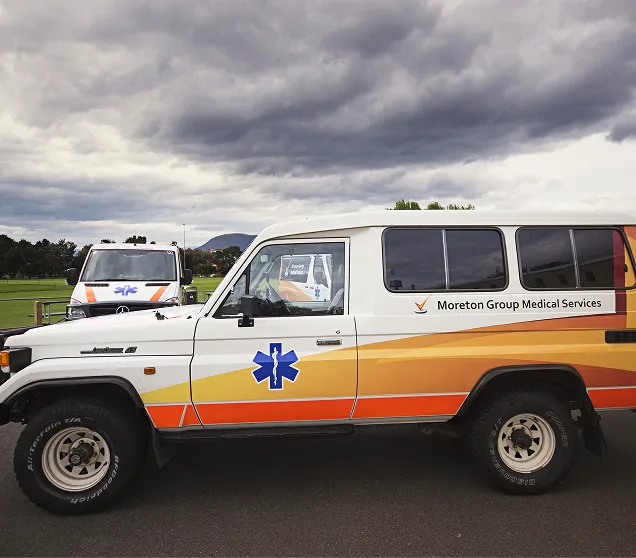
- Troopcarrier 4x4 ambulances
- Sprinter wheelchair ambulances
- Box-body Sprinter ambulances with mobile clinic set-ups
- Prado response vehicles
- 4x4 UTV rescue-style vehicles
- Response sedans
Vehicle availability changes regularly as vehicles come on and off of hire. Things like event season, big projects, and public holidays can make it harder to get a vehicle when you need one. Talk to us early about upcoming needs and we can discuss vehicle holds to ensure you are ready for your project.
If you need a specific vehicle, it’s usually best to check availability early and lock in the booking so you can be sure of getting what you need.
Ambulance Hire Use Cases
The phrase "ambulance hire" can be a bit of a misnomer so it helps to get the details sorted out early on.
Emergency Response vs Planned Hire
Emergency response is all about 000 incidents.
Planned hire is when you need support in advance where you know the location, the timing, and the type of medical care you need.
Patient Transport vs Standby Cover
Patient Transport is when you need to get someone from one place to another with medical supervision.
Standby Cover means an ambulance and medical team are on standby at a location so they can swoop into action if something happens.
Vehicle-Only Hire
Sometimes, a film production company or a training organisation just needs an ambulance vehicle without a crew.
Other times you already have a Ambulance in your fleet however it is down for maintained or you have the need for a second vehicle during shutdowns.
We are here to make sure you have the vehicle you need when you need it.
Types of Ambulance Hire Services
Patient Transport for More Complex Needs
Some transfers need additional medical considerations - oxygen therapy, monitoring equipment, mobility limitations, or specialist lifting gear.
Planning a safe transfer usually involves a few practical details:
- Patient Escort
- Air Ambulance
- Patient Repatriation
- Medical Escort
- International Patient Retrieval
These details help us figure out what vehicle, staffing, and time you’ll need.
Ambulance Hire for Mining Sites
Mining sites often present unique challenges when it comes to patient transport, including remote locations, hazardous conditions, and the need for specialized medical support.
For these conditions, our 4x4 Troopcarrier Ambulance and 4x4 Modular Ambulance options are ideal for providing reliable and safe patient transport. When organizing an ambulance hire for a mining site, key considerations include:
- On-Site Medical Support
- Transport for Injured Workers
- Emergency Evacuations
- Specialised Medical Equipment
- Multi-Patient Transfers
Worksite, Construction, and Remote Projects
Some industries hire ambulance vehicles to support projects where emergency response times can be unpredictable.
Some examples include:
- construction and infrastructure projects
- utilities and roadside works
- regional or remote operations
- industrial sites
In remote environments, 4x4 Troopcarrier ambulances are often the best bet for getting around difficult terrain and longer travel distances where standard road vehicles might struggle.
Non-Emergency Patient Transport (NEPT)
Non-Emergency Patient Transport helps out with transfers where the patient’s condition is stable but still needs medical supervision.
Some examples of NEPT bookings include:
- hospital discharge transport
- transfers between hospitals or clinics
- aged care transport
- disability transport where a standard vehicle won’t do the job
Depending on the patient’s condition and where they’re off to, we might need a referral or clinical direction before transport is confirmed.
If you’re not sure about what documentation is needed, we can usually sort that out during the booking process.
Film and Media Vehicle Hire
Film and television productions sometimes hire ambulance vehicles to get the realism in scenes or for on-site medical standby. In practice the vehicle could be supplied with or without clinical crew - and its how the production team see the vehicle being used that really dictates things so that everyone knows what's going on and who is responsible.
Medical equipment and onboard capability
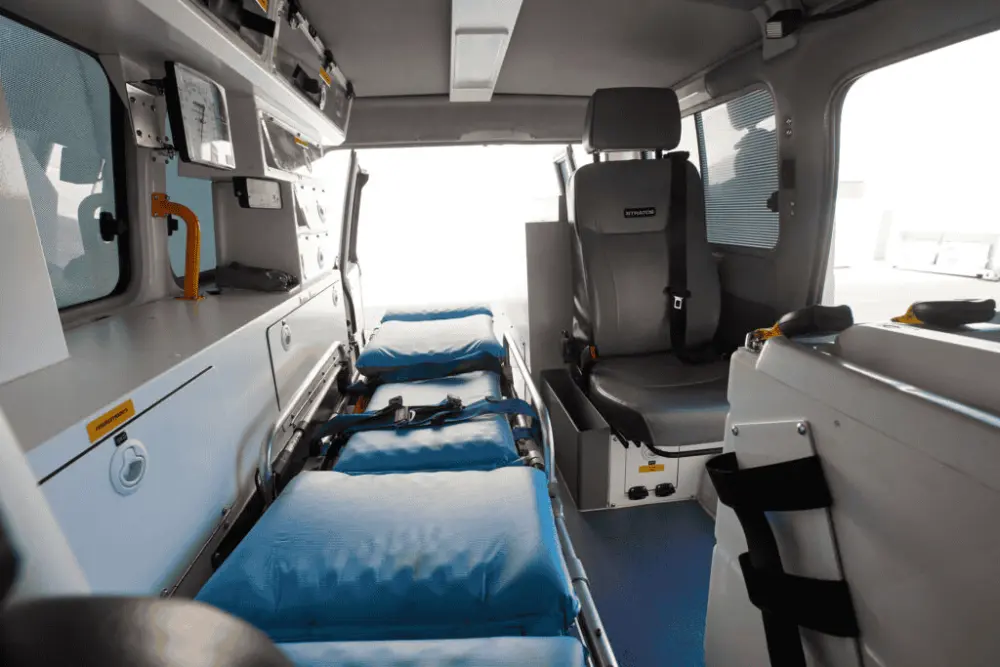
Ambulance vehicles are built for patient care, and not just merely getting patients from one place to another.
Depending on the specific setup, an ambulance you hire might come with equipment such as:
- oxygen systems with secure fittings
- stretcher systems and patient restraint points that are properly secure
- defibrillation capability if that's what you need
- patient monitoring equipment to keep an eye on the patient's vital signs
If there's a need for a higher level of care then the booking process is going to confirm which equipment is required and what qualifications the staff need to supervise its use.
Paramedics, staffing, and crew options
Some ambulance bookings are just for the vehicle, no paramedics or staff.
Others include properly trained paramedics or other qualified medical staff.
When you are planning things you'll usually want to clarify:
- who will be in the vehicle
- the level of clinical care that's needed
- whether extra crew are needed for lifting or transferring patients
- whether the receiving hospital is looking for a formal handover
Having a clear plan in place helps ensure that patient's safety, the crew's safety, and the safety of the organisation making the booking.
Ambulance hire costs and what affects pricing
How much it costs to hire an ambulance can vary a lot depending on the type of service and how long you need to hire it for.
Things that usually have an impact on pricing include:
- whether it's a standby situation or just a point to point transport
- how much time you need the vehicle for
- how far it has to travel
- location of the job and whether it's accessible
- if it's an after hours or holiday job
- whether you need higher level staff and qualifications
- if you need special equipment or a specific type of vehicle
If you want a rough idea of the budget then it's worth chatting about location, timing and service type first.
Information often requested during booking
You might be asked for things like:
- the pickup and destination addresses
- a primary contact person and their phone number
- information about access (stairs, lifts, unloading zones)
- patient mobility details or equipment needs
- any infection control considerations that might be relevant
- referral documentation if that's needed
This kind of information is useful for making sure patient care is top notch and that the scheduling is accurate.
Coverage across Australia
Moreton Group can help with jobs across Australia, including State Capitals, and can work with regional jobs depending on fleet availability and scheduling.
If you've got an organisation that operates in multiple locations then also it's worth chatting about large project coverage.
Training and compliance support
Working in non emergency transport services is regulated, and training plays a big part in making sure staff are up to scratch.
Moreton Group actually also deliver the HLT31120 Certificate III in Non-Emergency Patient Transport, which is useful for teams working in non emergency roles.
The course covers things like patient handling and transport procedures, plus operational expectations in the transport environment.
First aid or workplace training can also be arranged if needed.
Why organisations choose Moreton Group
Moreton Group provide practical medical services designed around operational needs.
Clients usually look for things like:
- access to a fleet of working ambulances
- clear booking processes
- support for events, worksites and patient transport
- help planning what vehicle and crew is right for the job
Moreton Group also support Moreton Medical Incorporated, a charitable organisation providing healthcare support for vulnerable Tasmanians.
Contact and booking
To check availability, get a quote or discuss the right hire option get in touch with the team
Phone: (03) 6278 3029
Email: enquire@moretongroup.com
If things are a bit urgent then just email with:
- your location and preferred time
- the type of ambulance hire required
- whether the booking involves patient transport or on site cover
- any patient or site details that might be relevant
If you are ready to go ahead then just get in touch and the team can help confirm availability and get the right vehicle and crew organised.